

What Is a Credit Investigation Report and What Does It Include?
When a business receives a credit application, the information supplied by the applicant is only the starting point. Before approving payment terms, setting a credit limit or entering a significant commercial relationship, decision-makers may need to know which details can be verified and whether any inconsistencies require attention.
A credit investigation report brings those findings together in one organised document. It records the scope of the investigation, the verification completed, the information confirmed and any limitations or discrepancies identified during the process.
The report does not guarantee that a customer or borrower will repay an obligation. Its purpose is to provide clearer, better-supported information that a lender, supplier or credit manager can consider alongside internal policies and other risk factors.
What Is a Credit Investigation Report?
A credit investigation report is the documented result of a credit investigation. It explains what the investigator was asked to verify, which checks were completed and what was found. Unlike an application form, which mainly contains information provided by the applicant, an investigation report records the outcome of independent verification activities within the agreed scope.
The report may cover an individual, a sole proprietor or a company. Its content will vary according to the client’s purpose, the information available and the appropriate authorisation. A report prepared for supplier credit may focus on business operations and trade references, while one supporting a loan assessment may include address, employment or declared asset verification.
A credit investigation report should also be distinguished from a standard consumer credit report issued by a credit bureau. A bureau report generally presents credit data held by that bureau. A credit investigation report may include broader verification work, field observations and client-specific checks, depending on the assignment.
Why Do Businesses Request Credit Investigation Reports?
Businesses may request a report when they need additional information before making a credit or commercial decision. Common situations include:
- Evaluating a new application for credit terms.
- Determining an appropriate initial credit limit.
- Reviewing a borrower, customer or potential commercial partner.
- Investigating inconsistencies in submitted documents or declarations.
- Reassessing an existing account after a material change.
- Supporting internal due-diligence and approval procedures.
The value of the report is not simply that it contains more information. It gives the client a structured way to distinguish confirmed facts, reported information, observations and unresolved issues.
What Is Included in a Credit Investigation Report?
Subject identification
This section records the subject information supplied for the investigation, such as the individual’s name or registered business name, known contact information and declared address. Only details relevant to the agreed purpose should be included.
Address verification
Where requested, the report may state whether a declared home or business address exists and whether the available findings reasonably connect the subject with that location.
Employment or business verification
The investigator may verify an employer, role, business activity or operating address through appropriate sources. The report should identify what was confirmed and what remained unavailable or inconsistent.
Credit and trade references
Authorised references can provide information about an applicant’s previous or current commercial relationships. Reference findings may help the client understand reported payment experience, but they cannot predict future repayment with certainty.
Property or declared asset verification
When property verification forms part of the scope, findings may cover title information, identified encumbrances or liens, location and zoning details, valuation support or document authentication. The exact checks depend on the request and available records.
Field investigation findings
A field visit may provide factual observations about an address, business operation, project or property. The report should avoid unsupported opinions and unnecessary personal detail.
Discrepancies and limitations
A useful report clearly states conflicting information, unavailable records, unresponsive references and other limitations. This prevents unverified information from being mistaken for a confirmed fact.
What Information Is Needed to Start an Investigation?
A client may be asked to complete a credit investigation form or provide written instructions defining the purpose and required checks. Depending on the assignment, the starting information may include:
- The subject’s name or registered business name.
- Known contact details and declared addresses.
- The purpose and required scope of the investigation.
- Supporting applications or documents to be verified.
- Specific questions or inconsistencies requiring attention.
- Appropriate consent or authorisation, where required.
Clear instructions help the investigator focus on relevant checks and avoid collecting information that is unrelated to the client’s decision.
Credit Investigation Report Sample Structure
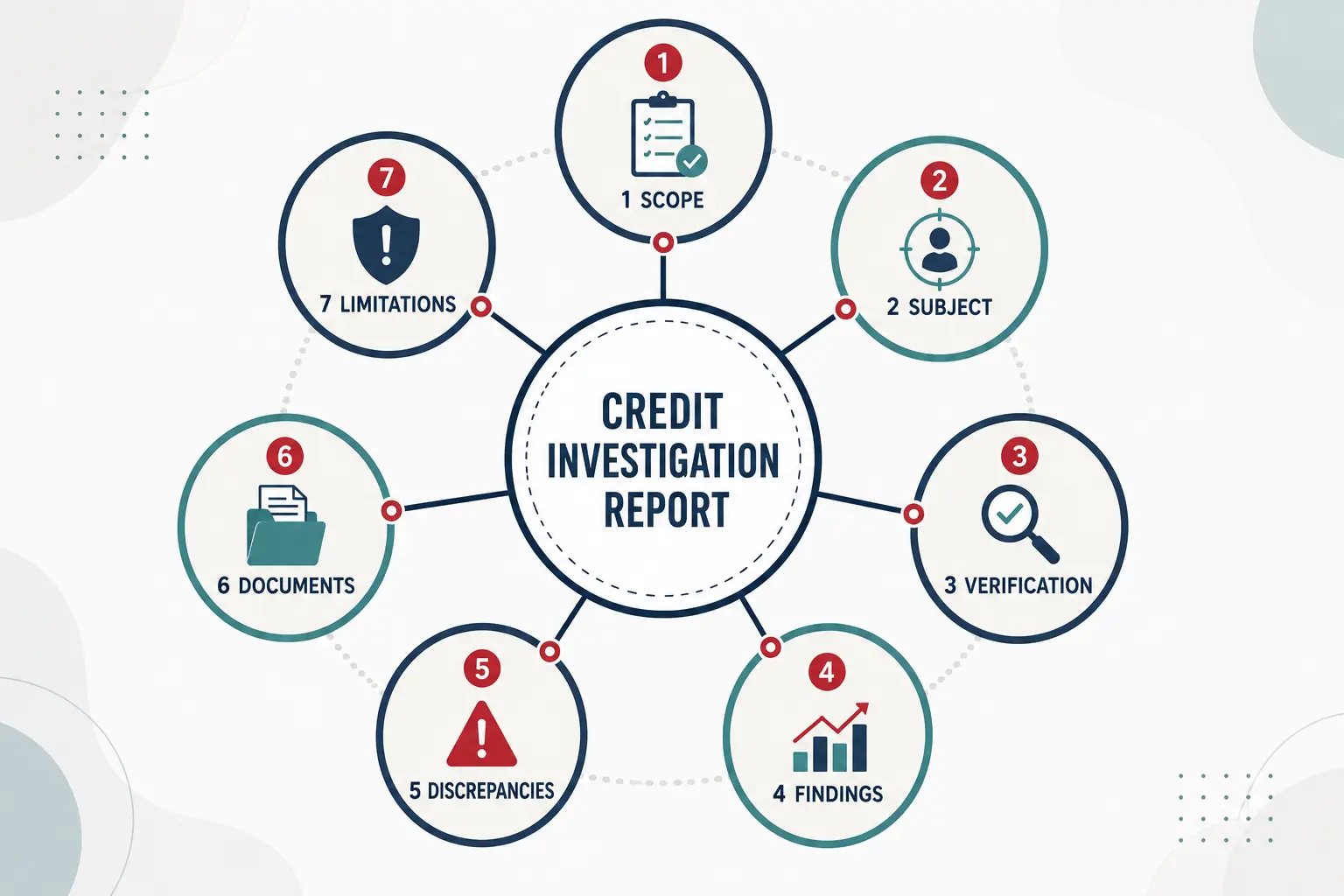
A credit investigation report sample may be organised using the following structure:
- Investigation scope and client instructions.
- Subject information supplied for verification.
- Verification activities completed.
- Confirmed findings and relevant observations.
- Discrepancies requiring clarification.
- Supporting documents or references.
- Unavailable information and investigation limitations.
This is an illustrative structure only. Inteliasia’s actual report format and contents may vary according to the service requested and agreed investigation scope.
A Practical Credit Investigation Example
A supplier receives an application from a new business requesting a PHP 500,000 credit facility with 60-day payment terms. Before approving the account, the supplier requests an investigation covering the company’s operating address, business activity, trade references and a declared property.
The completed report confirms that the company operates at the submitted address and that its stated business activity is consistent with the field findings. However, one trade reference cannot be verified, and the declared property is subject to an encumbrance that requires further review.
The supplier does not treat the report as an automatic approval or rejection. It considers the findings together with its credit policy and may approve a lower limit, request additional documentation, require further security or postpone the decision until the material discrepancy is clarified.
How Should Businesses Read the Report?

When reviewing the findings, it helps to recognise the difference between the following types of information:
Verified: Information supported by the investigation and available evidence.
Reported: Information supplied by the subject or another source but not necessarily confirmed independently.
Not verified: Information that could not be confirmed using the available sources or within the agreed scope.
Discrepancy: Conflicting information that may require clarification or additional documentation.
Observation: A factual detail recorded during fieldwork without an unsupported conclusion.
The full report should be considered in context. One favourable reference should not automatically outweigh a significant inconsistency, and one unavailable detail should not automatically be treated as an adverse finding.
Common Mistakes When Using Credit Investigation Reports
- Treating the report as a guarantee of repayment.
- Ignoring the scope, date or stated limitations of the investigation.
- Using outdated findings without considering whether circumstances have changed.
- Focusing only on favourable information and overlooking material discrepancies.
- Requesting checks that do not match the intended credit decision.
- Using information outside the appropriate or agreed purpose.
How Inteliasia Supports Credit Decisions
Inteliasia Credit Investigation Services provides investigation and verification support based on each client’s agreed requirements. Our related services include Credit Investigation, Field Project Inspection, Property Check, Pre-Employment Background Check, Insurance Inspection Report and Collection Services.
By defining the required scope before work begins, we can focus the investigation on the information relevant to the client’s credit, risk or due-diligence process.
Frequently Asked Questions
Can a credit investigation report guarantee repayment?
No. It provides verified information to support a decision, but it cannot guarantee repayment or remove every financial risk.
How long is a credit investigation report valid?
There is no universal validity period because addresses, employment, business activity and financial circumstances can change. Clients should consider the report date and whether updated verification is needed.
What does a credit investigation report sample look like?
A sample commonly includes the investigation scope, subject information, verification completed, findings, discrepancies, supporting documents and limitations. Actual formats vary by provider and assignment.
What happens if information cannot be verified?
The report should identify the information as unavailable, unconfirmed or subject to a limitation. The client can then decide whether further clarification or documentation is required.
What information is required for a credit investigation?
Requirements vary. A client may need to provide the subject’s name, contact information, declared address, supporting documents, purpose of the request and appropriate authorisation.
What is a credit investigation report?
It is a document presenting information gathered and verified during a credit investigation. Its contents depend on the requested scope and may include address, employment, business, reference, property and field-verification findings.
Request a Credit Investigation Report
Reliable verification can help your organisation make a better-supported credit or business decision. Inteliasia can discuss the information you need, define the appropriate investigation scope and explain the applicable report requirements.